How cars move: gears, grip, braking, and control
Connect the transmission and driven wheels to tires, brakes, steering, and suspension. Follow a beginner reading path from power delivery to road control.
Follow the reading pathSource-checked October 23, 2026. Editorial policy and review limits.
Separate power delivery from road control
The transmission helps match the engine to the journey
An engine does not need to run at the same speed whenever the car travels at the same speed. A transmission changes the relationship between engine rotation and road speed through its gear ratio. Different ratios help the engine operate at useful speeds in different driving conditions.
Begin with the transmission’s purpose before comparing manual and automatic designs. Our reading path then introduces the driven wheels: the wheels that receive driving power. This order helps you keep the route of power separate from the system used to select a gear.
Sources: U.S. Environmental Protection Agency
The tires meet the road
Tires form the contact between a car and the road. Their condition and pressure therefore belong in any discussion of control. For recommended pressure, use the vehicle placard or owner manual. The maximum pressure marked on a tire is not the car manufacturer’s recommended operating pressure.
Treat a drivetrain description as one part of the picture. When you compare two cars, make room in your notes for tire condition and the explanations below. Ask the inspector to assess the actual vehicle rather than drawing a conclusion from the drive-layout name alone.
Sources: National Highway Traffic Safety Administration
Suspension movement needs control
Springs allow suspension movement over bumps. Dampers, also called shock absorbers, resist that movement so the springs and wheels do not keep bouncing freely. Their work connects ride comfort with keeping the tires in contact with the road.
This distinction gives you a useful way to organize questions about a test drive. Record what you felt and when it happened. Then discuss those observations with a qualified inspector; a description of bouncing or vibration does not identify a single failed part on its own.
Sources: KYB Americas
Start here. Build one idea at a time.
Start with the route from the engine to the wheels. Then study the systems that change speed and direction. Follow the deeper articles when you want to compare a particular transmission design.
Why a car needs a transmission
Learn what a gear ratio does before comparing the names of manual, automatic, and continuously variable transmissions.
Front-wheel, rear-wheel, or all-wheel drive?
Identify which wheels receive driving power. Keep front-wheel, rear-wheel, and all-wheel drive separate from transmission type.
The four systems that keep you in control
Bring stopping, turning, tire contact, and wheel movement into the same picture. This is the overview for the more detailed control-system articles.
Springs, dampers, and struts do different jobs
Separate spring support from damping. Give the sensations you notice over a bump more precise descriptions before asking an inspector about them.
ABS and stability control: what they actually control
Learn the purpose and limits of anti-lock braking and electronic stability control. Connect their interventions to the tire contact you have just studied.
Common misunderstandings
A tire’s maximum pressure is the pressure I should use
Use the vehicle’s recommended cold tire pressure from its placard or owner manual. Do not substitute the maximum pressure printed on the tire sidewall.
Explore this in the full explanation →
Springs and dampers do the same job
The spring permits and supports suspension movement. The damper resists movement and controls repeated bouncing. Read the diagram with those separate jobs in mind.
All 14 explanations in this topic
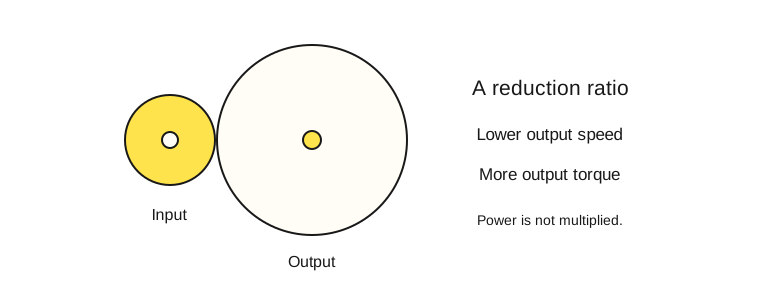
Why a car needs a transmission
Learn what changes when a car shifts gear, and how common transmission types differ.
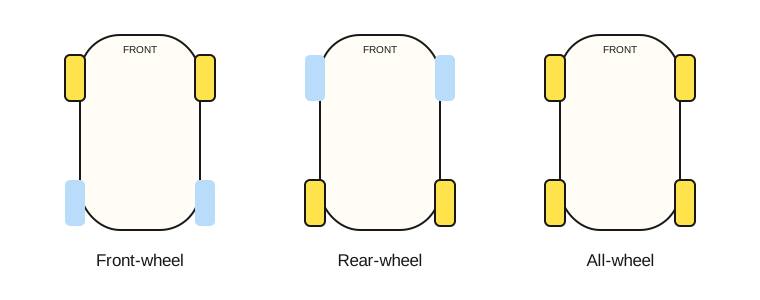
Front-wheel, rear-wheel, or all-wheel drive?
Separate driven wheels from steering wheels, and understand the limits of extra traction.
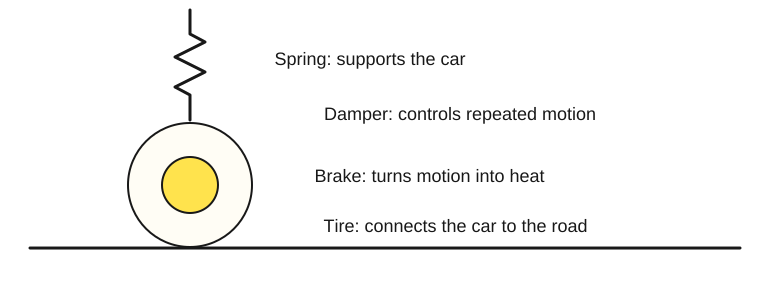
The four systems that keep you in control
See how braking, tires, steering, and suspension work together at the road surface.
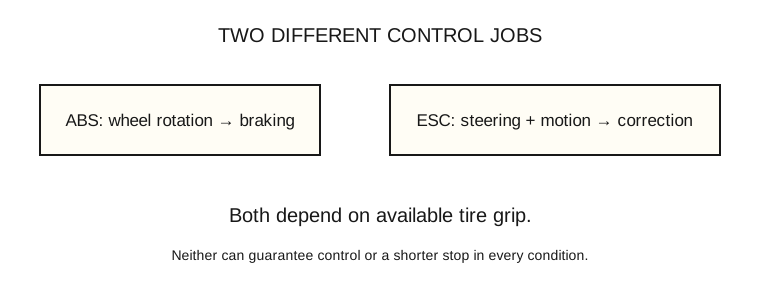
ABS and stability control: what they actually control
Understand the different jobs of anti-lock braking and electronic stability control—and their shared limits.
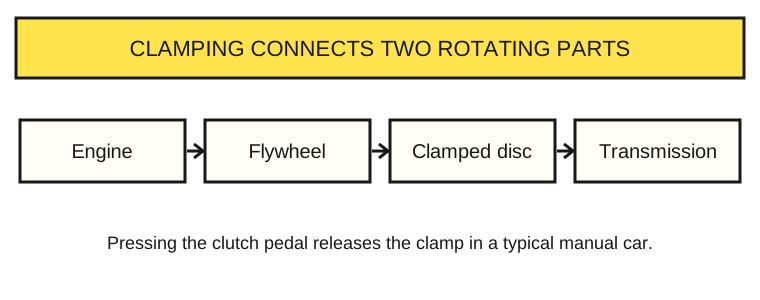
What the clutch does in a manual car
Understand engagement, slipping, and why a pedal symptom is only the start of a diagnosis.
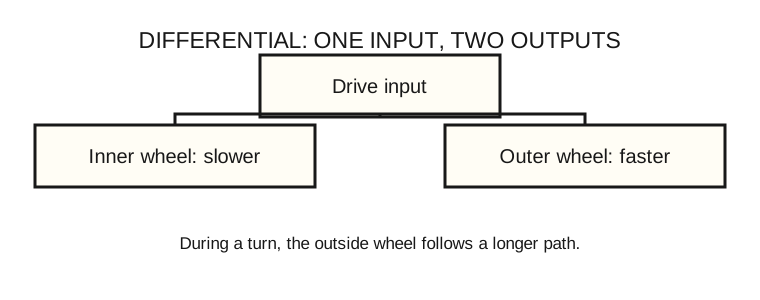
Why driven wheels need a differential
Follow the inner and outer wheel through a turn, then separate open, limited-slip, and locking designs.
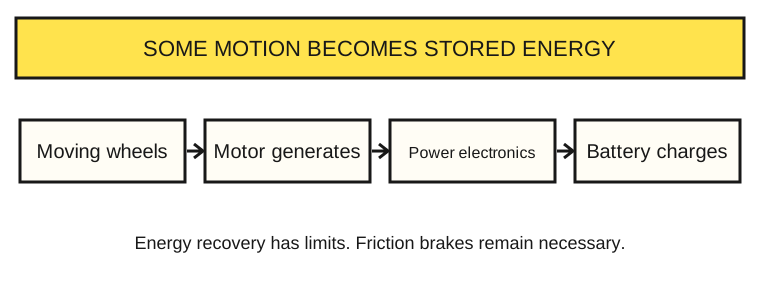
Regenerative braking: recovering some energy as you slow
See how an electric motor can generate electricity and why the car still needs friction brakes.
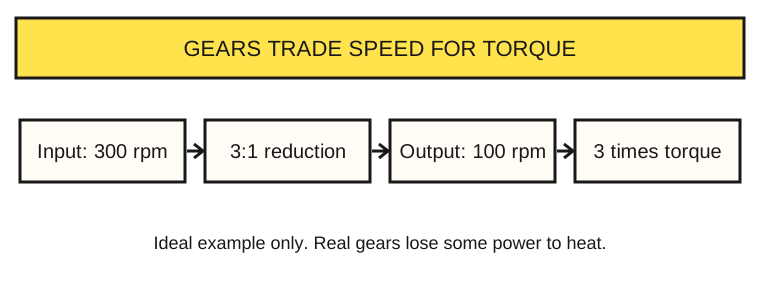
Gear ratios: trading rotational speed for torque
Make sense of a 3:1 reduction and why more wheel torque does not mean free extra power.
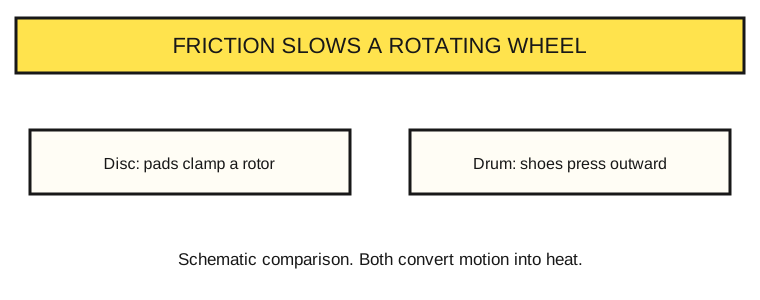
Disc and drum brakes: two ways to use friction
Meet the pads, shoes, discs, and drums that help turn motion into heat.
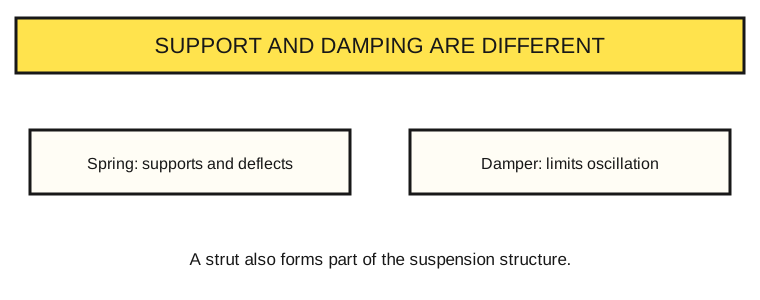
Springs, dampers, and struts do different jobs
Separate supporting the car from controlling its repeated movement over bumps.
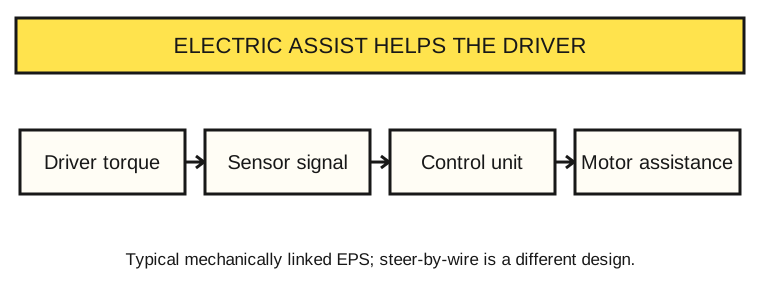
Electric power steering: assistance at the wheel
Understand the sensor, controller, and motor that reduce steering effort without replacing tire grip.
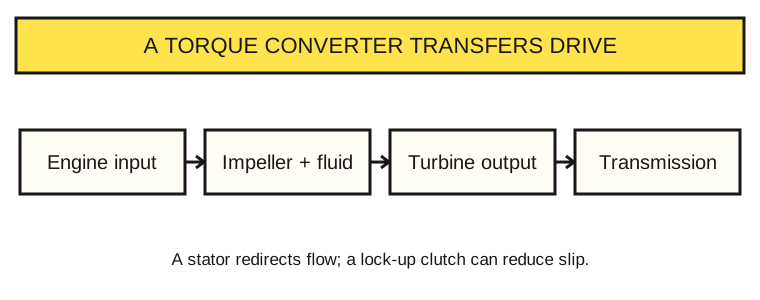
What a torque converter does in an automatic car
Follow the fluid coupling between the engine and transmission, then meet its lock-up clutch.
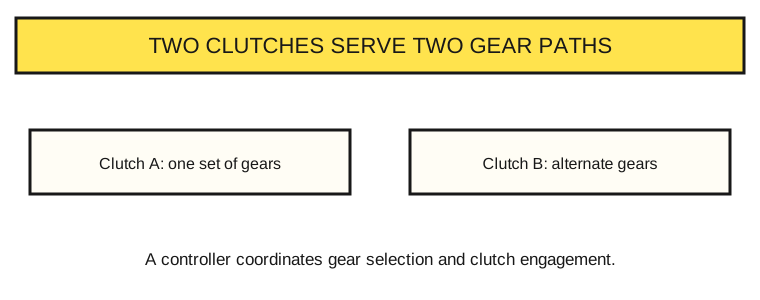
How a dual-clutch automatic changes gear
Understand the two gear paths, electronic preselection, and the buying questions behind the acronym.
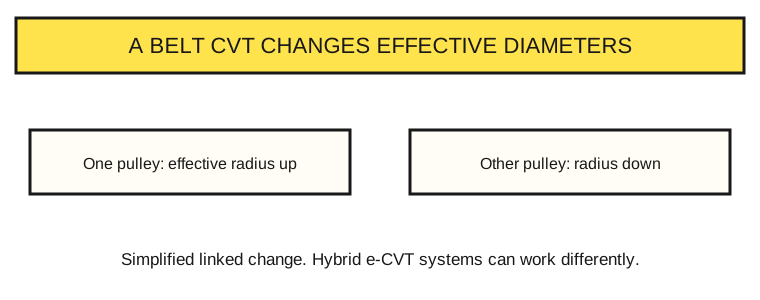
How a belt continuously variable transmission changes ratio
Understand changing pulley diameters and why a hybrid e-CVT may use a different mechanism.
Sources and review
Source-checked October 23, 2026. These original summaries use the references below. The linked articles explain each mechanism in more detail and carry their own supporting citations. Review means checking against cited evidence; it is not an independent professional inspection or engineering certification.
- Advanced Gasoline and Diesel Vehicles
U.S. Environmental Protection Agency · Turbocharging and Advanced Transmissions · Accessed 2026-10-23. Use and rights record.
- Tire Safety Ratings and Awareness · TireWise
National Highway Traffic Safety Administration · Tire Maintenance; Tire Pressure; Aging · Accessed 2026-10-23. Use and rights record.
- How shocks work
KYB Americas · Here are the basics; shock absorbers and hydraulic damping · Accessed 2026-10-23. Use and rights record.
Layouts, transmission behavior, tire requirements, and suspension equipment depend on the vehicle. The explanations describe mechanisms and help you prepare questions; they are not road-test procedures for finding a car’s limits.
Connect this topic to the next
Prefer one route through the whole site? Follow the complete beginner learning path.