The short answer
The tire sidewall identifies its size, construction, and other ratings. The vehicle’s label and manual tell you the approved tires and recommended cold pressure. These are related sources of information, but they do different jobs.
Read a size one part at a time
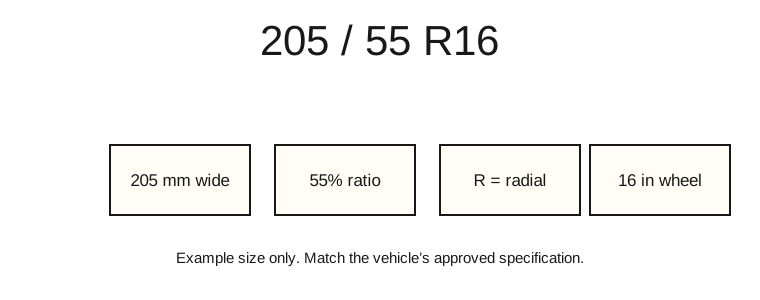
Consider the example 205/55 R16. The 205 is the nominal tire width in millimeters. The 55 is the aspect ratio: the sidewall height as a percentage of that width. The R identifies radial construction. The 16 describes the wheel diameter in inches at the tire’s mounting seat.
These numbers combine different units. The 55 is not 55 millimeters, and R does not mean radius. Other markings identify load and speed ratings. A load index needs its corresponding table; it is not a weight written directly in kilograms. A speed rating is not permission to drive at that speed on a public road.
Sources: Bridgestone Americas ↗
Use the vehicle’s pressure recommendation
Look for the Tire and Loading Information Label, commonly on the driver’s door opening in U.S.-market vehicles. The owner’s manual also identifies the required size and inflation guidance. Check pressure when the tires are cold, following the stated procedure. Front and rear recommendations may differ.
A maximum-pressure marking on a tire is not generally the recommended operating pressure for your car. Do not set all four tires to that number simply because it is molded into the sidewall. A tire pressure monitoring system, or TPMS, is useful, but routine gauge checks and damage inspections still matter.
Common misunderstandings
Two tires with the same size code are not necessarily interchangeable in every application. Confirm the required type, load rating, and other manufacturer specifications before replacing them.
A pressure warning going out does not prove the tire has no damage or slow leak. Have unexplained pressure loss assessed. Inflation, tread condition, and age all contribute different evidence about whether a tire remains suitable.
Sources: National Highway Traffic Safety Administration ↗ · Bridgestone Americas ↗
Sources & review
Reviewed . Original educational explanation, checked against the sources below. This is general guidance; consult the documents for the exact vehicle, year, configuration, and market.
- Determining Tire SizeBridgestone Americas · Width; Aspect Ratio; Construction; Rim Diameter; Load Index; Speed Rating · Accessed 2026-10-22.
- Tire Safety Ratings and Awareness · TireWiseNational Highway Traffic Safety Administration · Tire Maintenance; Tire Pressure; Aging · Accessed 2026-10-22.