The short answer
A fuel injector meters fuel into an engine. Port injection supplies gasoline into the intake passage before the intake valve. Direct injection supplies it inside the combustion chamber. The injection location changes the equipment and control needed. Neither name alone tells you the engine’s power, reliability, or maintenance cost.
The injector controls the fuel delivery point
An engine needs a suitable amount of fuel for the air it takes in. In a port-injected gasoline engine, the injector supplies fuel upstream of the intake valve. Air and fuel then enter through that valve. Engine controls manage the injection to suit the conditions.
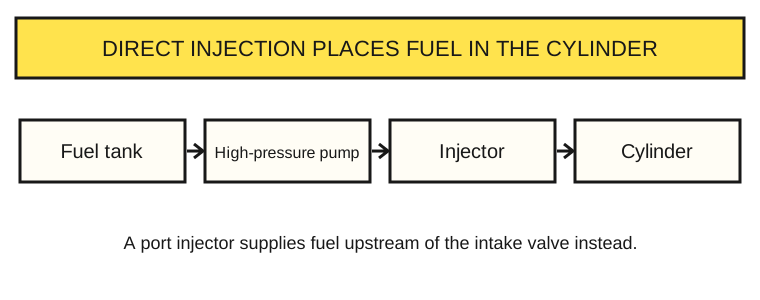
In a direct-injected gasoline engine, an injector sprays fuel into the cylinder itself. A high-pressure pump and fuel rail supply the injectors. The fuel must be delivered against conditions inside the cylinder, so this system differs from a low-pressure supply to the intake passage. Actual pressures depend on the design.
Sources: Bosch Mobility ↗ · Bosch Mobility ↗
Injection works with the rest of the engine
Injection controls fuel delivery, while ignition controls the spark in a typical gasoline engine. Airflow, valve operation, fuel delivery, and the spark must work together. Changing where fuel enters does not remove the need for correctly timed combustion or a suitable air supply.
Turbocharging concerns the air supplied to the engine. Direct injection concerns the fuel’s delivery location. An engine can combine these technologies, but the two terms are not interchangeable. Some engines use both port and direct injectors; check the technical description of the exact engine rather than relying on a shortened badge.
Sources: Bosch Mobility ↗ · Bosch Mobility ↗ · Cummins ↗ · NGK Spark Plugs / Niterra ↗
Common misunderstandings
Direct injection does not mean diesel. Gasoline and diesel engines can both inject fuel directly into a cylinder, while using different combustion strategies and equipment. The fuel type remains a separate question.
No injection label guarantees a particular service life or a universal cleaning schedule. Treat claims about guaranteed power gains, inevitable repairs, or a mandatory additive cautiously until they are supported for the engine concerned. Obtain a specific diagnosis and manufacturer instructions before counting an optional treatment as required maintenance.
Sources: U.S. Department of Energy ↗ · Bosch Mobility ↗ · Ford UK ↗
Sources & review
Reviewed . Original educational explanation, checked against the sources below. This is general guidance; consult the documents for the exact vehicle, year, configuration, and market.
- Gasoline port fuel injectionBosch Mobility · Operating principle; Two fuel injection systems in one: port and direct gasoline injection. Product-specific figures not generalized · Accessed 2026-10-22.
- Gasoline direct injectionBosch Mobility · Operating principle: high-pressure pump, fuel rail, in-cylinder injection. Product-specific pressure figures not generalized. · Accessed 2026-10-22.
- How a turbocharger worksCummins · Turbine and compressor operation · Accessed 2026-10-22.
- Spark Plug BasicsNGK Spark Plugs / Niterra · Spark Plug Basics; Pre-delivery Fouling; Types of Abnormal Combustion: Misfires. Ignition examples are not a complete list of misfire causes. · Accessed 2026-10-22.
- Buying a Used Car From a DealerFederal Trade Commission · Do Some Homework; Get an Independent Inspection Before You Buy; The Buyers Guide · Accessed 2026-10-22.
- Frequently Asked Questions About On-Board DiagnosticsU.S. Environmental Protection Agency · EPA 420-F-97-003 · What Is OBD And How Does It Work?; How Does OBD Inform Drivers Of Problems?; Why Does The Dashboard Light Blink Or Flash? · Accessed 2026-10-22.
- Service Intervals and Oil Change IntervalsFord UK · When should I get my car serviced?; variable oil service intervals · Accessed 2026-10-22.
- How Do Diesel Vehicles Work?U.S. Department of Energy · Alternative Fuels Data Center · Introduction and Key Components of a Light-Duty Diesel Vehicle · Accessed 2026-10-22.