The short answer
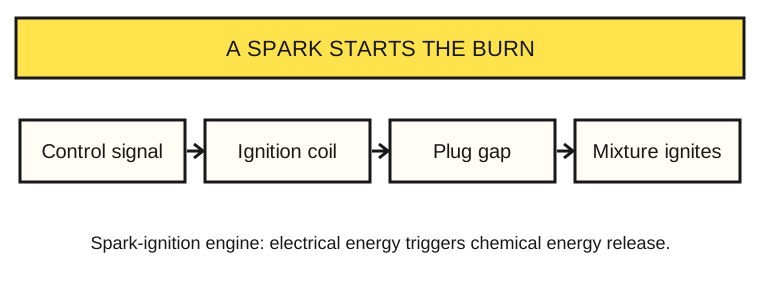
In a typical gasoline engine, an ignition coil supplies electrical energy to a spark plug. A spark crosses the plug’s small gap and starts combustion of the air and fuel mixture. The engine controls when this happens. The spark triggers the burn; the fuel supplies most of the released energy.
The plug creates a small, controlled starting point
A spark plug has electrodes separated by a gap. Sufficient voltage lets an electrical discharge cross that gap. This heats a small part of the mixture enough to begin burning. Combustion then develops through the cylinder’s mixture and raises pressure against the piston.
The spark must happen at a suitable point in the piston’s movement. Modern engine controls manage ignition timing for operating conditions. A spark plug is therefore part of a coordinated system, together with coils, wiring, sensors, fuel delivery, and the engine’s moving parts. Replacing one component does not renew that entire system.
Sources: NGK Spark Plugs / Niterra ↗ · U.S. Department of Energy ↗ · U.S. Department of Energy ↗
Wear can make reliable ignition harder
Electrode wear can increase the plug gap. Deposits can interfere with the intended electrical path. A damaged coil or connection can also prevent a suitable spark. These problems can cause a misfire, meaning the intended combustion event does not happen properly.
A misfire is a symptom, not proof that a spark plug is faulty. Fuel or mechanical problems can also disrupt combustion. A technician uses the symptoms, diagnostic information, and tests to identify a cause. A stored fault code can guide that work without naming a part that should automatically be replaced.
Sources: NGK Spark Plugs / Niterra ↗ · U.S. Environmental Protection Agency ↗ · U.S. Department of Energy ↗
Common misunderstandings
More expensive plugs do not automatically improve a healthy engine. Their design must match the engine’s requirements. Service access and associated work also affect a replacement quote, so the price of loose plugs does not represent the complete repair cost.
Diesel engines normally ignite fuel through the heat of compression rather than a spark plug. Some use glow plugs to help cold starting. A hybrid that contains a gasoline engine can still need spark-plug servicing even though it sometimes moves on electric power.
Sources: Toyota Motor Sales ↗ · U.S. Department of Energy ↗ · U.S. Department of Energy ↗
Sources & review
Reviewed . Original educational explanation, checked against the sources below. This is general guidance; consult the documents for the exact vehicle, year, configuration, and market.
- Spark Plug BasicsNGK Spark Plugs / Niterra · Spark Plug Basics; Pre-delivery Fouling; Types of Abnormal Combustion: Misfires. Ignition examples are not a complete list of misfire causes. · Accessed 2026-10-22.
- Internal Combustion Engine BasicsU.S. Department of Energy · How Does an Internal Combustion Engine Work? · Accessed 2026-10-22.
- How Do Gasoline Cars Work?U.S. Department of Energy · Alternative Fuels Data Center · Introduction and Key Components of a Gasoline Car · Accessed 2026-10-22.
- Frequently Asked Questions About On-Board DiagnosticsU.S. Environmental Protection Agency · EPA 420-F-97-003 · What Is OBD And How Does It Work?; How Does OBD Inform Drivers Of Problems?; Why Does The Dashboard Light Blink Or Flash? · Accessed 2026-10-22.
- Service Intervals and Oil Change IntervalsFord UK · When should I get my car serviced?; variable oil service intervals · Accessed 2026-10-22.
- Buying a Used Car From a DealerFederal Trade Commission · Do Some Homework; Get an Independent Inspection Before You Buy; The Buyers Guide · Accessed 2026-10-22.
- Instrument Cluster — Warning Lamps and IndicatorsFord Motor Company · online owner manual · Warning Lamps and Indicators; Engine Oil Warning Lamp; Malfunction Indicator Lamp; Scheduled Maintenance Indicator Lamp · Accessed 2026-10-22.
- Basic Car Maintenance Tips & Services ChecklistToyota Motor Sales · 10. Inspect Your Belts and Hoses; 13. Replace Your Engine Air Filter; 14. Check Your Spark Plugs. Generic intervals and unqualified fuel-economy claims are not adopted. · Accessed 2026-10-22.
- How Do Diesel Vehicles Work?U.S. Department of Energy · Alternative Fuels Data Center · Introduction and Key Components of a Light-Duty Diesel Vehicle · Accessed 2026-10-22.
- How Do Hybrid Electric Cars Work?U.S. Department of Energy · Alternative Fuels Data Center · Introduction, Electric generator, and Transmission · Accessed 2026-10-22.