The short answer
The odometer displays accumulated distance, but the current reading needs context. Compare it with dated service, inspection, title, and history records for the same vehicle. Check units and investigate inconsistencies. A digital display does not make tampering impossible, and a consistent-looking record does not replace a condition inspection.
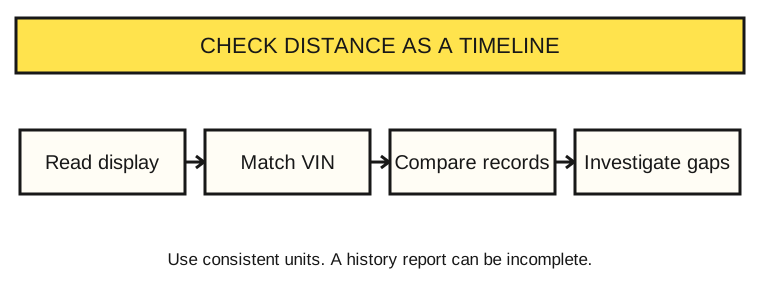
A timeline is more informative than one number
List each available record with its date, distance, unit, source, and vehicle identifier. A maintenance invoice from another car is not evidence for this one, even if the model and color match. Use the vehicle identification number to connect documents to the actual car.
Look for a plausible progression over time and investigate entries that move backward or change unexpectedly. A gap does not prove fraud, and an apparent reversal can need checks for transcription, units, or replaced instruments. Ask for supporting explanations and documents rather than accepting an unexplained correction.
Sources: National Highway Traffic Safety Administration ↗ · Federal Trade Commission ↗
Digital readings still need corroboration
NHTSA explains that electronic odometers can also be altered. The appearance of a modern dashboard is therefore not a safeguard by itself. Compare the current reading with maintenance and inspection records and with available history information.
Physical wear offers supporting context, not an exact distance measurement. Pedals, seats, and other parts can wear differently with use or be replaced. A qualified inspector may identify inconsistencies that deserve further checks, but neither a tidy cabin nor a worn steering wheel can independently certify the distance traveled.
Sources: National Highway Traffic Safety Administration ↗ · Federal Trade Commission ↗
Common misunderstandings
A low reading does not automatically mean low wear or good care. Age, storage, operating conditions, and documented maintenance remain important. A high reading also does not specify which repairs have been done or which are due.
A clear history search is not proof of a complete history. Missing events and reporting errors can remain. Separate confidence in the distance record from confidence in current mechanical condition: both affect a buying decision, but neither one answers all the questions covered by the other.
Sources: National Highway Traffic Safety Administration ↗ · Federal Trade Commission ↗ · Ford Motor Company, online owner manual ↗
Sources & review
Reviewed . Original educational explanation, checked against the sources below. This is general guidance; consult the documents for the exact vehicle, year, configuration, and market.
- Odometer FraudNational Highway Traffic Safety Administration · Consumer tips: compare readings with maintenance and inspection records, physical wear and history reports. Federal consumer education; no legal deadline or prevalence estimate adopted. · Accessed 2026-10-23.
- Buying a Used Car From a DealerFederal Trade Commission · Do Some Homework; Get an Independent Inspection Before You Buy; The Buyers Guide · Accessed 2026-10-22.
- Flood-Damaged VehiclesNevada Department of Motor Vehicles · Vehicle History Checks; Tips to Spot Flood Damage. Incomplete records and professional inspection; Nevada title procedures not generalized. · Accessed 2026-10-23.
- Scheduled Maintenance — Special Operating Conditions Scheduled MaintenanceFord Motor Company, online owner manual · Operating-condition examples; tasks differ by condition. Vehicle-specific intervals not reproduced. · Accessed 2026-10-23.