The short answer
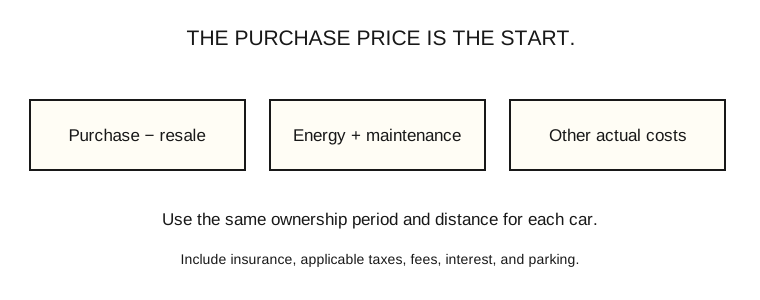
Owning a car can involve energy, maintenance, repairs, insurance, taxes, fees, parking, and borrowing costs. A useful comparison uses the same ownership period and distance, states its assumptions, and avoids counting the purchase cost twice.
Separate the money needed now from the cost over time
The advertised price is a starting point. Obtain a written purchase quote that identifies included charges and optional extras. Then list the costs of keeping and using that particular car. Insurance, registration, energy, maintenance, and repairs may change the comparison between two vehicles with similar asking prices.
For a simple ownership comparison, one approach is purchase price minus eventual resale proceeds, plus running and borrowing costs over the period. The lost value is depreciation. Resale proceeds are uncertain, so label them as an estimate. Do not add the entire purchase price again after already including that price-minus-resale amount.
Sources: Federal Trade Commission ↗ · U.S. Department of Energy ↗
Turn your actual use into an estimate
Use the same expected distance and number of years for each car. For fuel, divide distance by matching distance-per-fuel units, then multiply by a local price. For electricity, use the relevant energy-consumption figure and tariff. Be clear whether your energy figure includes charging losses, and add any separate session or parking charges you expect.
Get an insurance quote for the actual driver and vehicle. Use the manufacturer’s schedule and an inspection report to identify servicing and near-term repairs. Include applicable local taxes, registration, parking, and any charging installation you need. These inputs are more useful than an unexplained national average.
Sources: U.S. Department of Energy / U.S. Environmental Protection Agency ↗ · U.S. Department of Energy ↗ · Federal Trade Commission ↗ · Ford UK ↗
Common misunderstandings
A more efficient car is not automatically the less expensive car to own. Its purchase cost, condition, insurance, and other expenses still matter. An electric car also has costs beyond electricity, including tires, brakes, and model-specific checks.
A forecast is not a bill or a guarantee. Future energy prices, repairs, and resale values can differ from your assumptions. Keep a separate view of monthly cash commitments as well: an estimated resale value does not pay a bill due today.
Sources: U.S. Department of Energy ↗ · U.S. Department of Energy ↗ · Consumer Financial Protection Bureau ↗
What Fifi has actually cost
I bought Fifi in cash. By that I mean the dealership offered me a price a bit below MSRP on the condition that I opened a loan, so I opened the loan and paid it off within six months.
Michigan insurance is outrageous. It is a major political issue here, and yeah.
Oil changes. I change the oil myself, so an oil change costs about $50 in parts. I learned how from my friends several years ago. I did have to buy about $100 in tools, ramps and a torque wrench, but it was a pretty easy process to learn. There’s a lot of stuff out there that makes car maintenance look scary, but honestly it’s not bad. I think it’s fun getting a little greasy. I change Fifi and my wife’s 2023 Odyssey on their schedules, 10,000 miles per change with full synthetic oil, and I can get them both done in an afternoon.
Everything else. I’ve never had to bring the car in for service beyond the tires and some mods, like tinting the windows and getting it detailed. So overall the cost of ownership has been nice.
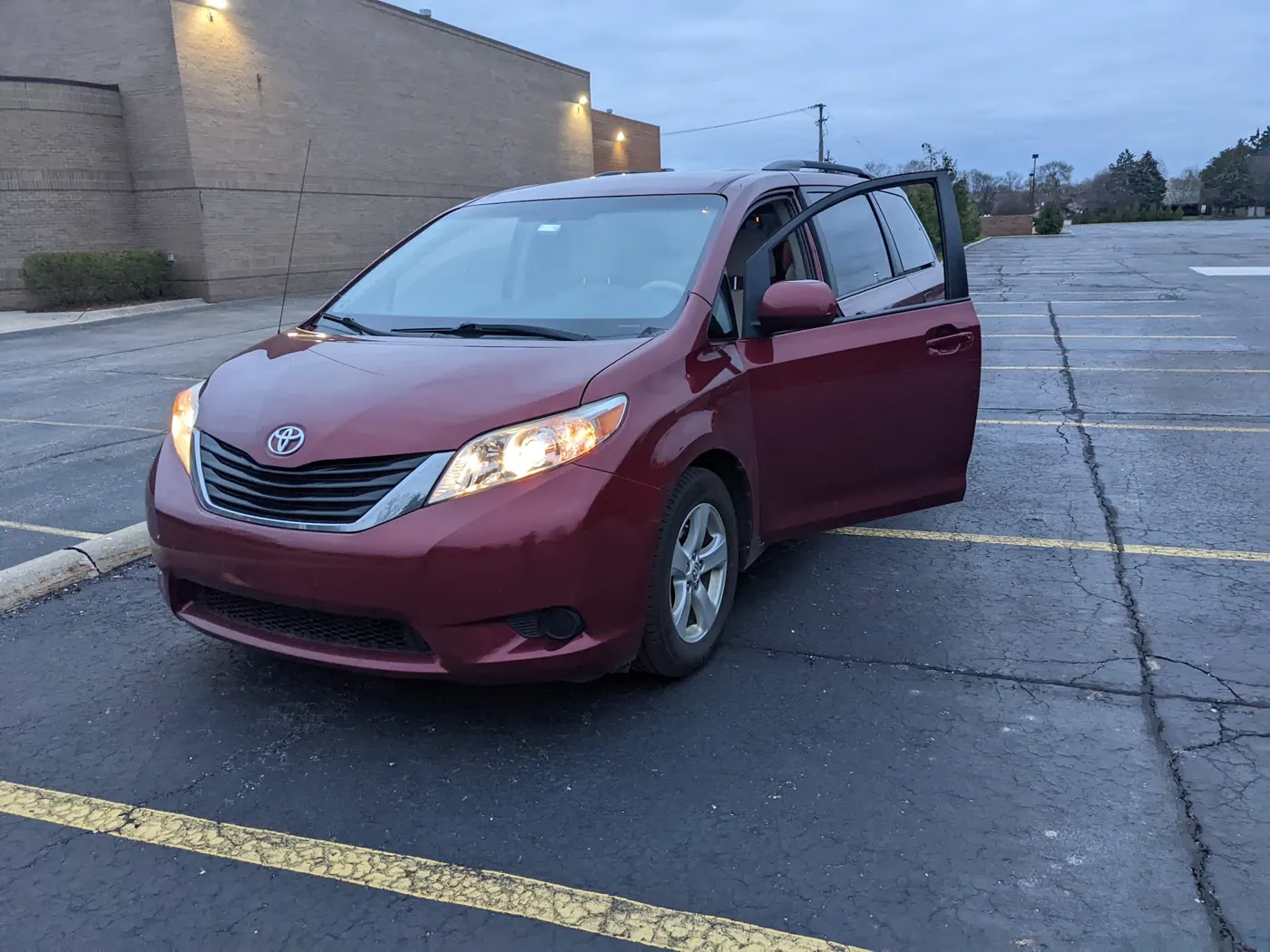
The car before Fifi. I had a 2014 Toyota Sienna with 100,000 miles on it. I bought it in early 2017 for $12,000, and when I traded it in for Fifi I got $11,000 for it. That van had some lasting power. I don’t expect the same out of Fifi when it comes time to sell. It’s the brand and the type of car. Kias aren’t expected to hold value like Toyotas, and it’s a little sedan. I also expect to drive Fifi for a very much longer time.
Sources & review
Reviewed . Original educational explanation, checked against the sources below. This is general guidance; consult the documents for the exact vehicle, year, configuration, and market.
- Buying a Used Car From a DealerFederal Trade Commission · Do Some Homework; Get an Independent Inspection Before You Buy; The Buyers Guide · Accessed 2026-10-22.
- Vehicle Cost CalculatorU.S. Department of Energy · Alternative Fuels Data Center · Vehicle comparison inputs; cost assumptions and total ownership cost · Accessed 2026-10-22.
- Gasoline Vehicles: Learn More About the LabelU.S. Department of Energy / U.S. Environmental Protection Agency · FuelEconomy.gov · 2. Fuel Economy; 4. You Save/Spend More Over 5 Years; 5. Fuel Consumption Rate; 6. Estimated Annual Fuel Cost · Accessed 2026-10-22.
- Charging Electric Vehicles at HomeU.S. Department of Energy · Alternative Fuels Data Center · Installing Charging Equipment in Your Home; Complying with Regulations; Electricity Costs for Charging · Accessed 2026-10-22.
- Service Intervals and Oil Change IntervalsFord UK · When should I get my car serviced?; variable oil service intervals · Accessed 2026-10-22.
- Vehicle Cost Calculator Assumptions and MethodologyU.S. Department of Energy · Alternative Fuels Data Center · Annual Costs; Vehicle Purchase Cost and Net Present Value; Key Calculation Assumptions and Data · Accessed 2026-10-22.
- How do I compare auto loan offers?Consumer Financial Protection Bureau · Opening comparison criteria; Understanding the impact of the length of your loan on your total costs · Accessed 2026-10-22.
- Maintenance and Safety of Electric VehiclesU.S. Department of Energy · Alternative Fuels Data Center · Maintenance Comparison and Battery Maintenance · Accessed 2026-10-22.