The short answer
Fluids reduce friction, move heat, transmit force, or clean surfaces. They are not interchangeable. The manufacturer specifies what each system needs.
Oil separates moving surfaces
An engine contains moving surfaces that would otherwise rub against each other. Lubricating oil helps reduce friction between them. Using the correct oil is part of maintaining the design’s operating conditions.
A label such as 0W-20 describes an oil viscosity grade, not complete approval for every engine. Find the required grade and any manufacturer performance specification in the manual. An invoice should identify what was actually used.
Sources: Cleveland State University ↗ · Ford UK ↗
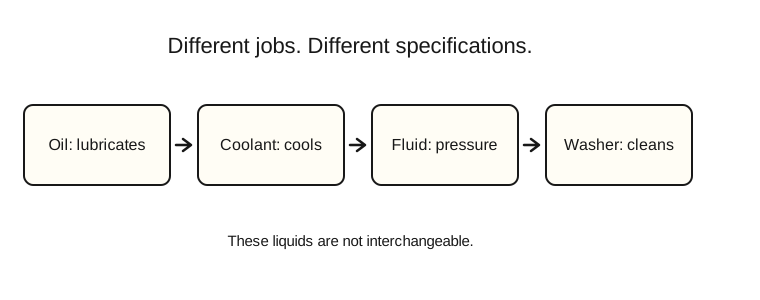
Coolant and brake fluid have other jobs
A cooling system helps keep components within their operating temperature range. Many cars circulate liquid coolant to carry heat away. Electric vehicles can also have liquid thermal systems for the battery, motor, and power electronics. The exact circuits and service requirements differ.
Brake fluid carries pressure in a hydraulic braking system. Vapor bubbles can compress, which can impair pressure transmission. Use the specified fluid and service instructions. Never infer compatibility just from a bottle’s color or a fluid’s appearance.
Sources: U.S. Department of Energy ↗ · Brembo ↗
Common misunderstandings
Adding fluid is not the same as changing it at the required service. A low level can also point to a leak or another fault, depending on the system.
A battery electric car has no combustion engine oil service, but it can still have brake fluid, coolant, and drive-unit service requirements. Check its own schedule.
Sources: U.S. Department of Energy ↗
Sources & review
Reviewed . Original educational explanation, checked against the sources below. This is general guidance; consult the documents for the exact vehicle, year, configuration, and market.
- Engine LubricationCleveland State University · Mechanical Engineering · Fuel Economy through Engine Oil Formulation · Accessed 2026-10-22.
- Service Intervals and Oil Change IntervalsFord UK · When should I get my car serviced?; variable oil service intervals · Accessed 2026-10-22.
- How Do All-Electric Cars Work?U.S. Department of Energy · Alternative Fuels Data Center · Introduction and Key Components of an All-Electric Car · Accessed 2026-10-22.
- Brake Fluid solutions for carBrembo · FAQs: Are brake fluids interchangeable? What is vapour lock? · Accessed 2026-10-22.
- Maintenance — Engine Coolant CheckFord Motor Company · online owner manual · Engine Coolant Check: opening scalding warning and fluid-specification instruction. Only these general principles are used, not the model-specific filling procedure. · Accessed 2026-10-22.
- Maintenance and Safety of Electric VehiclesU.S. Department of Energy · Alternative Fuels Data Center · Maintenance Comparison and Battery Maintenance · Accessed 2026-10-22.